Standing Desk vs. Treadmill Desk: What Actually Works for a Coding Job
The honest answer: it depends on the task. Deep code review is a standing-desk activity. Slack triage is a treadmill activity. Meetings are neither.
Standing desks: good for posture, bad by default
Standing all day is not the goal. Static standing produces its own set of complaints — sore feet, locked knees, aching lower back. A standing desk is only useful if you cycle between sitting and standing.
Aim for a rough 1:2 ratio — 20 minutes standing per hour is a reasonable starting point. Increase as your feet adapt, and always stand on something softer than a hardwood floor.
Treadmill desks: better for low-cognitive-load work
Walking at 1.5–2 mph is compatible with reading, Slack, and light editing. It is not compatible with writing tricky code or leading a call where you need to sound composed.
The productivity hit on complex tasks is real. Match the task to the tool: use the walking pad for the work your brain can do on autopilot.
Newsletter
One useful workout or gear pick per week.
Written for people who live at a desk. No spam, unsubscribe anytime.
The pragmatic setup
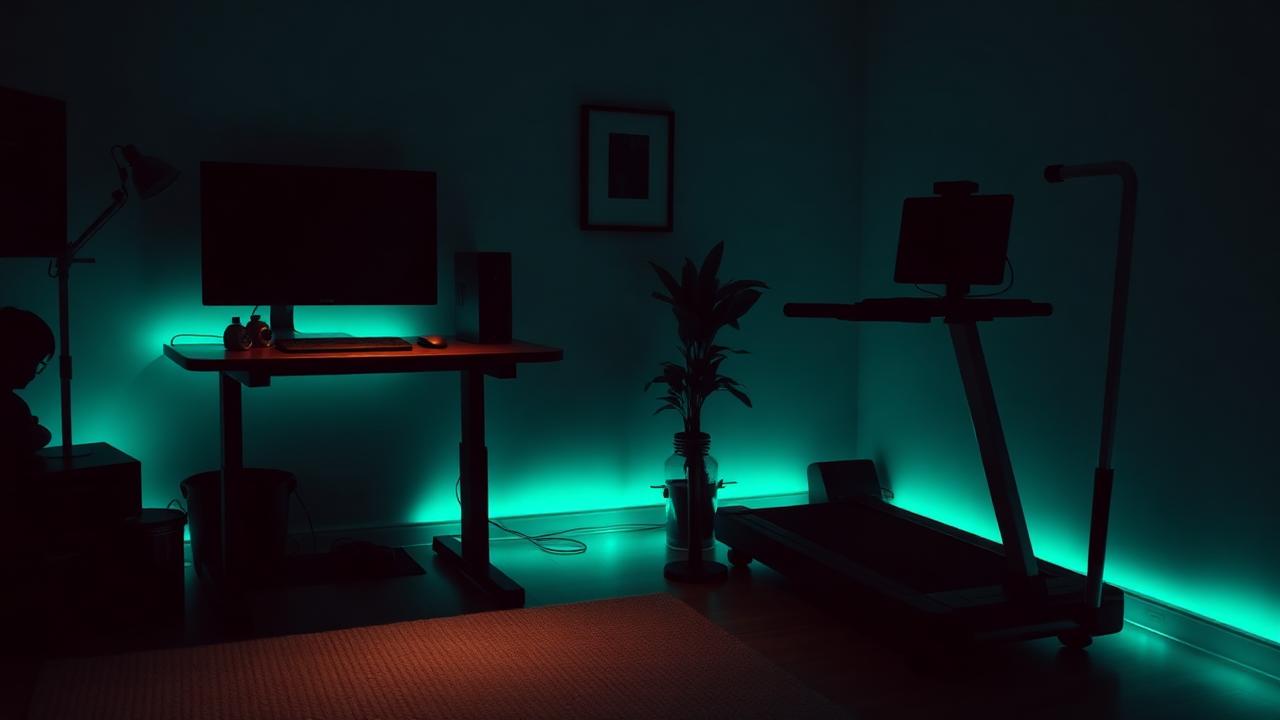
A sit/stand desk plus an under-desk walking pad covers the widest surface area of dev workflows. Sit for hard problems, stand for reviews, walk for triage and calls where you don't need to share screen.
The Active Nerds Team
Engineers and lifters writing practical fitness content for people who spend their day at a keyboard.